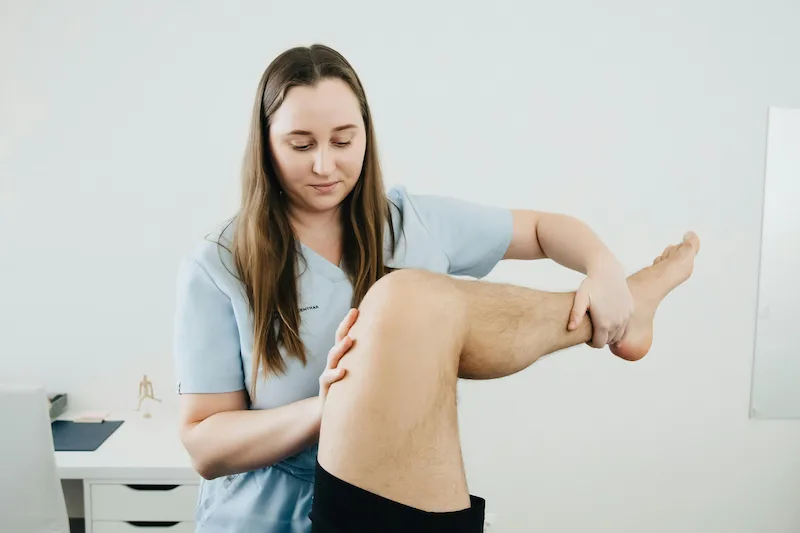
Knee pain doesn’t always match what your X-rays show. Learn why pain can be severe even with mild X-ray change, and how inflammation, nerves, and blood flow can contribute to pain; and when genicular artery embolization (GAE) may help.
Why Your Knee Pain Might Be Worse Than Your X-Ray Suggests
Many patients are shocked when their provider tells them that “your x-ray doesn’t look that bad.” This is not comforting when you are still struggling with pain that affects walking, exercise and even sleep. The truth is X-rays do NOT show the full picture. Pain often comes from tissues that aren’t visible on X-rays. There are many reasons why knee pain can feel much worse than imaging shows.
- X-Rays Only Show Bone, Not Painful Soft Tissue
- X-rays cannot visualize:
- Synovium (lining of the joint)
- Early cartilage damage
- Inflammation
- Bone marrow swelling
- Nerve irritation
- Abnormal blood vessel growth
- These structures are major drivers of pain, yet invisible on standard imaging.
- X-rays cannot visualize:
- Synovitis (Joint Lining Inflammation) is a Major Pain Source
Studies show that synovitis correlates more strongly with pain than cartilage damage does. Inflamed synovial tissue causes stiffness, swelling burning or aching pain, and pain with stairs or walking. Even if cartilage does not look “terrible,” synovitis can be severe.
- Nerve Sensitization Can Amplify Pain
When knee inflammation persists, nerves around the join become hypersensitive, and mild movement feels painful. Weather changes or activity can flare symptoms. This is why pain may feel “out of proportion.”
- Abnormal Blood Vessel Growth Fuels Pain
In osteoarthritis, the knee develops extra blood vessels that feed inflammation. These vessels also allow pain fibers to grow deeper into the joint, thus increasing sensitivity. This is one of the reasons Genicular Artery Embolization (GAE) can help. It reduces this abnormal blood flow.
- X-Rays Can Miss Early or Moderate Arthritis
Typical X-rays may underestimate disease because they only show cartilage space, not the cartilage itself. It is difficult to see the bone marrow edema and it does not show meniscus degeneration leading to missing early stage arthritis. MRI is more sensitive, however, even MRI may not predict pain levels perfectly.
- Pain Can Come from Areas Outside the Joint
There are many common overlooked contributors to pain. Some of these include, tendinitis, bursitis, meniscus tears, biomechanical issues (flat fleet, weak quadriceps, joint instability) and referred pain from hip or lower back. This means your knee may be compensating for other problems in the body.
What You Can Do If X-Rays Don’t Match Your Pain
- Ask your provider about further imaging. MRI or ultrasound can detect synovitis, meniscus teas, tendon inflammation, bone marrow edema and early cartilage loss.
- Consider treatments targeting inflammation, not just cartilage. Options may include, anti -inflammatory medications, physical therapy that help with strengthening, bracing may help and then interventional procedure like GAE.
- Explore Genicular Artery Embolization (GAE). GAE reduces inflammation by decreasing abnormal blood flow around the knee. This may help when X-rays show mild or moderate arthritis, when injections no longer provide relief, or when surgery is not desired or recommended. Studies show significant pain reduction even when imaging findings are mild.
Citations
- Hayashi D, et al. “Synovitis and Joint Pain in Osteoarthritis.” Radiology. 2012.
- Scanzello CR, et al. “Inflammation in Osteoarthritis.” Current Opinion in Rheumatology. 2017.
- Little MW, et al. “Genicular Artery Embolization for Osteoarthritis: Clinical Evidence.” CVIR. 2021.
- Neogi t, et al. “Why Osteoarthritis Pain Does No Always Match Imaging.” Nature Reviews Rheumatology. 2013.