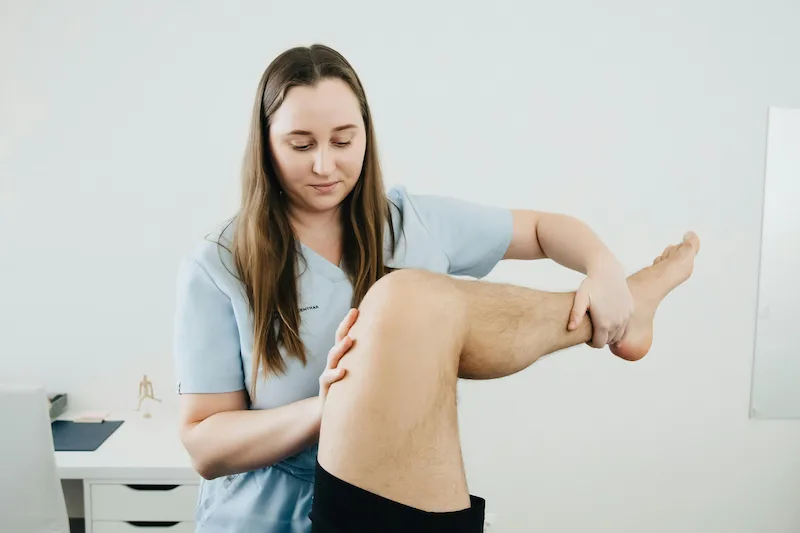
If my knee X-ray doesn’t look bad, why am I still in so much pain?

Knee pain doesn’t always match what your X-rays show. Learn why pain can be severe even with mild X-ray change, and how inflammation, nerves, and blood flow can contribute to pain; and when genicular artery embolization (GAE) may help.

Why Your Knee Pain Might Be Worse Than Your X-Ray Suggests

Many patients are shocked when their provider tells them that “your x-ray doesn’t look that bad.” This is not comforting when you are still struggling with pain that affects walking, exercise and even sleep. The truth is X-rays do NOT show the full picture. Pain often comes from tissues that aren’t visible on X-rays. There are many reasons why knee pain can feel much worse than imaging shows.

  1. X-Rays Only Show Bone, Not Painful Soft Tissue
    1. X-rays cannot visualize:
      1. Synovium (lining of the joint)
      2. Early cartilage damage
      3. Inflammation
      4. Bone marrow swelling
      5. Nerve irritation
      6. Abnormal blood vessel growth
    2. These structures are major drivers of pain, yet invisible on standard imaging.
  1. Synovitis (Joint Lining Inflammation) is a Major Pain Source

Studies show that synovitis correlates more strongly with pain than cartilage damage does. Inflamed synovial tissue causes stiffness, swelling burning or aching pain, and pain with stairs or walking. Even if cartilage does not look “terrible,” synovitis can be severe.

  1. Nerve Sensitization Can Amplify Pain

When knee inflammation persists, nerves around the join become hypersensitive, and mild movement feels painful.  Weather changes or activity can flare symptoms. This is why pain may feel “out of proportion.”

  1. Abnormal Blood Vessel Growth Fuels Pain

In osteoarthritis, the knee develops extra blood vessels that feed inflammation.  These vessels also allow pain fibers to grow deeper into the joint, thus increasing sensitivity.  This is one of the reasons Genicular Artery Embolization (GAE) can help. It reduces this abnormal blood flow.

  1. X-Rays Can Miss Early or Moderate Arthritis

Typical X-rays may underestimate disease because they only show cartilage space, not the cartilage itself. It is difficult to see the bone marrow edema and it does not show meniscus degeneration leading to missing early stage arthritis.  MRI is more sensitive, however, even MRI may not predict pain levels perfectly.

  1. Pain Can Come from Areas Outside the Joint

There are many common overlooked contributors to pain. Some of these include, tendinitis, bursitis, meniscus tears, biomechanical issues (flat fleet, weak quadriceps, joint instability) and referred pain from hip or lower back.  This means your knee may be compensating for other problems in the body.

What You Can Do If X-Rays Don’t Match Your Pain

  1. Ask your provider about further imaging. MRI or ultrasound can detect synovitis, meniscus teas, tendon inflammation, bone marrow edema and early cartilage loss.
  2. Consider treatments targeting inflammation, not just cartilage. Options may include, anti -inflammatory medications, physical therapy that help with strengthening, bracing may help and then interventional procedure like GAE.
  3. Explore Genicular Artery Embolization (GAE). GAE reduces inflammation by decreasing abnormal blood flow around the knee.  This may help when X-rays show mild or moderate arthritis, when injections no longer provide relief, or when surgery is not desired or recommended. Studies show significant pain reduction even when imaging findings are mild.

Citations

  1. Hayashi D, et al. “Synovitis and Joint Pain in Osteoarthritis.” Radiology. 2012.
  2. Scanzello CR, et al. “Inflammation in Osteoarthritis.” Current Opinion in Rheumatology. 2017.
  3. Little MW, et al. “Genicular Artery Embolization for Osteoarthritis: Clinical Evidence.” CVIR. 2021.
  4. Neogi t, et al. “Why Osteoarthritis Pain Does No Always Match Imaging.” Nature Reviews Rheumatology. 2013.

Why Am I Still Having Knee Pain If Injections No Longer Work?

(A Patient Friendly Guide + When Genicular Artery Embolization Procedure May Help)

Still having knee pain even after steroid or gel injections? Learn why injections stop working, what causes persistent knee pain, and how genicular artery embolization (GAE) may help when surgery isn’t an option.

Understanding Why Knee Pain Continues After Injections

Knee pain caused by osteoarthritis (OA) can be incredibly frustrating, especially when treatments that used to help stop working. Steroid injections, gel (Visco supplement) injections, or even platelet-rich plasma (PRP) can provide temporary relief. But many patients reach a point where the pain returns or never fully improves.  If this sounds familiar, you are not along. Up to 40-50% of patients eventually stop responding to injections over time. Let’s understand why this happens and wat options may still help, even if surgery isn’t possible.

Why Injections Stop Working

  1. Osteoarthritis continues to progress
    1. Injections help calm inflammation or lubricate the join, ut they cannot stop cartilage loss.
    2. As knee OA worsens:
      1. Inflammation inside the joint becomes chronic
      2. Bone spurs may form
      3. Nerves around the joint become hypersensitive
    3. Eventually, injections don’t provide enough benefit
  2. Steroid injections have diminishing returns
    1. Steroids reduce inflammation, but:
      1. The effect becomes shorter over time
      2. Steroids can weaken cartilage if used too frequently
      3. Guidelines limit them to 3-4 injections per year
    2. So for may patients, pain relief slowly fades.
  3. Gel injections don’t work well in advanced OA
    1. Hyaluronic acid injections act like lubrication, but in sever arthritis, the join is to damaged for them to be helpful.
    2. Studies show they work best in mild-moderate OA, not bone on bone disease.
  4. Pain may not be coming only from the joint
    1. OA affects the entire knee system:
    2. This explains why some patients still have pain even if imagining doesn’t look “terrible.”

If Surgery Isn’t an Option- You Still Have Options

Some patients cannot undergo knee replacement due to:

  • Medical conditions
  • Age
  • Personal preference
  • Fear of recovery
  • Prior poor surgical outcomes
  • Wanting a less invasive option

Fortunately, there is a safe and minimally invasive alternative, Genicular Artery Embolization (GAE). 

What is Genicular Artery Embolization?

Genicular Artery Embolization is non -surgical, image guided procedure performed by an interventional radiologist. Instead of treating the joint directly, GAE targets the inflammation source.

How it works:

  • Tiny particles are injected into the genicular arteries (vessels around the knee)
  • These particles reduce abnormal blood flow that drives inflammation
  • This decrease in inflammation reduces nerve irritation and pain

Most patients have not incisions, only a small pinhole in the wrist or groin.

Who is a Good Candidate?

GAE may help if you:

  • Have knee pain from osteoarthritis
  • Are not getting relief from injections
  • Are not ready or cannot have knee replacement
  • Want a procedure with minimal downtime

Studies show 60-80% of patients experience significant long term pain improvement after GAE.

What to Expect Durin the Procedure

Before:

  • You will meet with an interventional radiologist for evaluation
  • Imaging (like X-ray or MRI) confirms OA severity
  • You may undergo diagnostic testing to pinpoint pain sources

During:

  • Local numbing + light sedation
  • Catheter inserted through a tiny puncture
  • Embolization particles placed

After:

  • Same day or next-day discharge
  • Most patients walk immediately
  • Full recovery in a few days

Pain relief often improves steadily over weeks.

Frequently Asked Questions

“Will GAE fix my arthritis?”   

  • No, it reduces inflammation and pain but does not rebuild cartilage.

“How long does the relief last?”

  • Studies show improvement for 1-2 years, sometimes longer.

“Can I still get other treatments later?”

  • Yes, GAE does not prevent future surgery or injections.

When Should you Consider a Consultation?

You may benefit from evaluation if your knee pain:

  • Interferes with walking or sleep
  • Limits daily activities
  • No longer responds to steroid or gel injections
  • Prevents you from exercising
  • Affects quality of life

GAE may offer meaningful relief without major surgery.

Citations

  1. Altman RD, et al. “Recommendations for the Use or Intra-Articular Therapies in the Management of Osteoarthritis.” Osteoarthritis and Cartilage. 2015.
  2. Bagla S, et al. “Genicular Artery Embolization for the Treatment of Knee Pain Secondary to Osteoarthritis.”  Journal of Vascular and Interventional Radiology. 2020.
  3. Little MW, et at. “Genicular Artery Embolization for Osteoarthritis-Related Knee Pain: Clinical Results.” Cardiovascular and Interventional Radiology. 2021.
  4. American College of Rheumatology. “Guidelines for Management of Osteoarthritis of the Knee.” 2019.

How Long Should I Keep Getting Knee Injections Before Considering Other Options Like GAE?

Wondering how long knee injections should be tried before exploring other treatments like Genicular Artery Embolization (GAE)?  Learn how injections work, how long they last, when they stop being effective, and when its time to consider minimally invasive alternatives.

If Your Injections Are not Lasting, You are Not Alone

It can be frustrating when knee injections offer less relief over time, shorter periods of benefit, or no improvement at all.  Many may wonder “how many injections should I try before moving on to something else?”  The answer is surprisingly consistent across orthopedic, rheumatology and interventional radiology guidelines for care. Our thought is that if injections are not providing meaningful or lasting relief after 1-3 rounds, its time to consider other options.

Understanding How Knee Injections Work (an Why They Stop Working)

Knee injections do not “fix” arthritis, but rather temporarily reduce inflammation or improve lubrication. They work best in early to moderate osteoarthritis and tend to lose effectiveness at the disease progresses.  Here is how each type of injection works:

  1. Corticosteroid Injections (CSI)
    1. Reduces inflammatory chemicals inside the knee join
    2. Offer relief anywhere from 2-8 weeks, sometimes longer in mild cases
    3. Often loses effectiveness after repeated use because inflammation becomes chronic or less steroid responsive
    4. Repeated (more than 3-4 injections per year) steroid injections may accelerate cartilage thinning if overused. Boston University OA Initiative Study, 2017 found increased cartilage loss in some repeated use patients.

When to stop CSI:

  1. If the last 1-2 injections provided less than 4-6 weeks of relief
  2. If pain returns quickly even with rest or medication
  3. If injections are needed more than 3 times per year
  4. Hyaluronic Acid (HA)/ Gel Injections
    1. Brand names include Synvisc, Monovisc, Euflexxa, Orthovisc, Gel-One.
    2. They help by improving join lubrication, reducing friction and possibly calming mild inflammation. They work best when some cartilage is still present and join space is not severely narrowed.
    3. Relief may last 3-6 months, sometimes up to 12 months in early disease.
    4. Research show that patients with advanced osteoarthritis often get little to no meaningful improvement.  Cochrane Review, 2015 found modest benefits in early Osteoarthritis (OA) but minimal help in late OA. 

When to stop HA injections:

  1. If 1-2 rounds lead to no measurable improvement
  2. If pain persists with daily activities despite treatment
  3. If swelling and stiffness return quickly
  4. PRP (Platelet-Rich Plasma) Injections
    1. PRP may help with early arthritis by reducing inflammation and supporting cartilage metabolic health. However, PRP results vary widely depending on technique and patient factors.
    2. PRP may loose effectiveness for many reasons. If the arthritis is moderate to advanced OA, when the joint has significant inflammation or bone marrow lesions and when mechanical alignment is an issue.  American Journal of Sprots Medicine, 2019 found that PRP works best for mild OA and loses benefit for progressive arthritis.

When to stop PRP:

  1. If 1-2 treatments offer little improvement
  2. If daily function or walking is still limited
  3. If swelling and stiffness persist

How Do You Know When It’s Time to Consider GAE?

Genicular Artery Embolization is not a first line treatment, but it becomes a strong option when you’ve tried 1-3 injections without lasting relief. It is also something to consider when you are not ready for knee replacement surgery, or you want to delay surgery, or if you cannot undergo surgery due to medical risks and other reasons or if the pain is out of proportion to x-ray findings.  If you have signs of synovitis (inflammation), GAE primarily targets abnormal blood vessel growth that fuels this inflammation. An MRI or ultrasound may show synovial hypertrophy, joint lining inflammation and increased blood flow. All of which can help to determine if you will benefit from GAE.  Lastly, if you want to reduce pain without steroids or repeated injections, GAE may be the options to choose.  GAE provides longer lasting relief, often 1-3 years, by reducing the blood vessels that feed chronic inflammation.  A 2023 study in Journal of Vascular Interventional Radiology showed that there is up to 70% reduction in pain. There is improved function in 12-24 months and MRI will show reduction in synovitis.

How Many Injections Are “Too Many”?

Here is a simple guideline used by providers that you may want to keep in mind.

  1. If injections work well then continue for 6-12 months. You should have pain relief that is meaningful and that is improving your quality of life.
  2. If injections helped before but don’t anymore then you should consider stopping after 2-3 attempts. This usually means inflammation has become persistent and the joint is no longer responding.
  3. If injections never helped then no need to repeat a treatment that is not effective for your type of arthritis.

What Comes After Injections?

When injections stop working, you may want to consider other options:

  1. Physical therapy & strengthening
  2. Targeted bracing for alignment support
  3. Anti-inflammatory medications
  4. Weight management strategies
  5. MRI or ultrasound to understand the source of the pain
  6. Minimally invasive options like Genicular Artery Embolization that are especially helpful for patients with persistent inflammation despite “mild to moderate” X-rays findings.

You should not feel stuck cycling through injections that are not helping. In most cases, if injections don’t provide lasting relief after 1-3 attempts, it’s appropriate to consider other treatments like GAE. Your pain, function and quality of life, and not just your X-ray, should guide treatment decisions.

Citations

  1. McAlindon T. et al. Corticosteroid injection and cartilage loss in knee OA. JAMA. 2017.
  2. Bannuru R. et al. Visco-supplementation for knee OA. Cochrane Review. 2015.
  3. Filardo G. et al. PRP effectiveness in knee OA. AJSM. 2019.
  4. Okuno Y. et al. Synovitis reduction after GAE. JVIR. 2023.
  5. Padia S. et al. Mechanisms of GAE in knee osteoarthritis. Techniques in Vascular & Interventional Radiology. 2023. 
Take risk assessment now